Project objectives

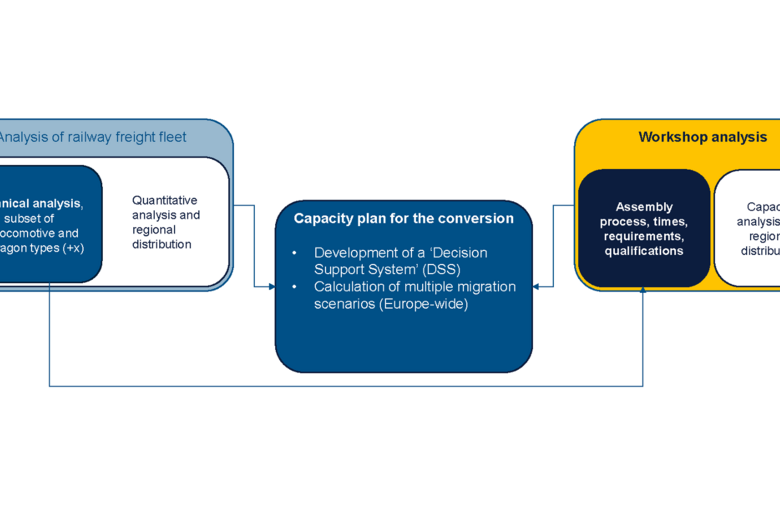
Expanding upon the foundation established by the European DAC Delivery Programme (EDDP) and the ongoing efforts in the DAC migration roadmap, the DACFIT project is set to create a comprehensive plan for the technical upgrading and retrofitting of Digital Automatic Coupling (DAC) in the existing European rail freight locomotives and wagons fleet. The project aims further to identify and assess the retrofitting capacity of workshops across Europe, along with developing a model for setting up an implementation plan that facilitates the roll-out of an interoperable DAC to enhance European rail freight operations.
Dacfit-en-bild

DACFIT Objective

Objective 1: Deliver a fact-based assessment of the DAC retrofit readiness of freight locos & wagons

  • Quantitative Assessment of Rail Freight Vehicles: Quantify the existing rail freight vehicle fleets (wagon/loco) and on-track machines per type in Europe. Evaluate their current and potential future usage in traffics through stakeholder contacts and publicly accessible sources.
  • Technical Assessment and Categorization: Conduct a technical assessment of the most relevant rail freight vehicle types and categorize these vehicles based on their DAC upgrading/retrofitting ability, ensuring a comprehensive understanding of technical aspects.
  • Establishment of Contacts and Mitigation Measures: Establish direct contacts and contact groups with wagon and locomotive keepers/lessors and manufacturers. Foster regular exchanges to enhance communication and collaboration. Define joint mitigation measures to address potential challenges.
  • Information Storage and Documentation: Implement a structured approach for storing acquired information per vehicle type. Document the source of information, considering storage in an EDDP "type database" (not part of this project) under specific conditions or inclusion in project deliverables.
  • Pipelining of Information to Relevant Entities: Establish a streamlined process for the timely and efficient flow of information to key entities, including the European DAC Delivery Programme(EDDP), EDDP WP3, FP5 TRANS4M-R project, CSA-Project DACcord, System Pillar whereapplicable, and linked institutions.

Objective 2: Deliver a fact-based DAC Retrofitting Capacity Assessment in Europe

  • Determine Upgrading/Retrofitting Process and Lead Times: Quantify the upgrading/retrofitting process and time requirements for various vehicle types within the European rail freight system.
  • Define Tasks, Infrastructure, and Resources/Skills: Specify the tasks involved, outline the necessary infrastructure, and identify the required resources and skills for the successful delivery of upgrading/retrofitting initiatives.
  • Establish Overview of Workshop Capacity: Set up a comprehensive overview detailing the available workshop capacity in Europe, including the consideration of potential mobile workshops that can contribute to DAC implementation.
  • Define Qualification/Certification Modules: Develop qualification and certification modulesspecifically tailored for workshops engaged in Digital Automatic Coupling (DAC) upgrading and retrofitting activities, ensuring standardized skill sets and procedures.
  • Pipeline Information to Relevant Entities: Establish a streamlined process for the timely and efficient flow of information to key entities, including the European DAC Delivery Programme (EDDP), EDDP WP3, FP5 TRANS4M-R project, CSA-Project DACcord, System Pillar where applicable, and linked institutions.

Objective 3: Deliver a scalable and executable DAC retrofitting (capacity) plan

  • Set-Up a Simulation Model for Vehicle to Workshop Allocation: Build up a simulation model for effectively allocating vehicles to workshops for upgrading/retrofitting processes.
  • Draft Results Provision with Default Data: Provide preliminary results using freely chosen default data, aligning with the gathered fleet and workshop data.
  • Scenario Calculation: Calculate various scenarios, e. g. timelines, to assess the potential outcomes and challenges associated with upgrading/retrofitting.
  • Determination of Upgrading/Retrofitting Capacity: Determine the required upgrading/retrofitting capacity and identify potential gaps by applying the model. Engage in discussions with stakeholders to explore and define potential countermeasures.
  • Establishment of Contacts and Contact Groups with RUs: Establish direct contacts and contact groups with Railway Undertakings (RUs) if required. Foster a direct approach and ensure regular exchanges to facilitate communication.
  • Pipelining of Information to Relevant Entities: Establish a streamlined process for the timely and efficient flow of information to key entities, including the European DAC Delivery Programme(EDDP), EDDP WP3, FP5 TRANS4M-R project, CSA-Project DACcord, System Pillar where applicable, and linked institutions.